Research Article
Aim & Scope
Turkish Journal of Agricultural Research, began publishing life in order to increase accessibility, visibility, use of scientific studies, to gain momentum and to benefit scientists and publishes the individual researches conducted about agricultural science which may be defined as a collection of significant scientific and technological advancements and innovations related to such researches.,
Turkish Journal of
Agricultural Research is an International and peer-reviewed
journal published by Siirt University, Faculty of Agriculture. Turkish Journal
of Agricultural Research publishes original research articles generated from studies
conducted in all agricultural areas especially in Horticulture, Field Crops,
Plant Protection, Agricultural Structures and Irrigation, Agricultural
Economics, Agricultural Machinery, Agrology and Plant Nutrition, Agricultural
Biotechnology and Animal Science. In addition, reviews in current issues of
particular importance are published.
Author Guidelines
A. General Principles
Turkish Journal of Agricultural Research publishes the individual researches conducted about agricultural science which may be defined as a collection of significant scientific and technological advancements and innovations related to such researches. The language of the journal is Turkish and English. In Turkish publications, the new guide published by the Turkish Language Association and the Turkish dictionary are taken as basis. It is highly advisable for the authors who wrote their studies in English to have their manuscripts checked or edited by a linguistic before sending them.
The manuscripts to be published in the journal should not be published in other journals or must not have taken any publication right before. The studies have to be prepared according to scientific rules and ethics. The results of any research to be published as a manuscript need to have the report of a committee of ethic and that report’s copy should be attached with the manuscript itself. The author or all the authors whose studies are to be published in the journal will own all kind of liabilities in terms of their manuscripts.
The manuscripts submitted for publication will have a preevaluation period by Journal Editor in-Chief and Editorial Board. Editorial Board is authorized to send back the manuscripts which they have found not having enough quality, to their authors without informing or sending to referees. Moreover the manuscripts having spelling or grammar errors or failing to be compatible with writing rules will be send back to the authors. The manuscripts being evaluated send to at least two referees. After the evaluation of both the referees and Editorial Board, if the manuscript has not qualified, it will be send back to the author(s) with the reasons for rejection. The studies having qualified after the evaluation of Editorial Board will be provided with correction or suggestion list by the referees if there are any. The corrected manuscripts with their correction lists or reports are to be uploaded to the system in maximum 30 days. The manuscripts sent after this period will not be accepted. The Editorial Board will finalize whether the manuscript will be published or not after taking the reports of the referees and the corrections into consideration.
The accepted manuscripts’ galley proofs will be sent to corresponding author and authors edit or check those in terms of printing errors and send them back as soon as possible. When the manuscript is qualified to be published, the context, text, the authors or the sequence of the authors cannot be changed.
The author or the authors of any manuscript have to sign a Copyright Release Form if they give the publication right to Turkish Journal of Agricultural Research.
In a single volume, maximum two manuscripts of the same author can be published.
Turkish Journal of Agricultural Research will be published three times a year in February, June and October.
B. Manuscript Preparation Format
The text will be written on an A4 page format, 11 pontes (including all the titles), in Times New Roman writing style with double space. All the margins up or down, left or right must be 3 cm and every page should be numbered (the numbering should be till the end). The paragraph indent will be 0.5 cm.
Manuscripts should include the following sections; Title, Abstract, Keywords, 1. Introduction, 2. Materials and Methods, 3. Results and Discussion, 4. Conclusions, Acknowledgement (if any), References, Figures and Tables. According to the manuscript style or format the “Discussion” part can be separated from the results part and be evaluated in a separate section. All the titles of main chapter names or subchapters will be written in bold, small letters without any paragraph indent.
The manuscript should not include (after the title) the name or surname of the author, the institution, correspondence data etc while their being uploaded (please refer to C. Additional Files).
The manuscript should not exceed 18 pages including reference list. Author/authors may use the Article Preparation Template at the web site of the journal to create these sections.
The manuscript should be prepared according to the following guidelines.
Title: It should be short, precise and related to the subject of the manuscript, the first letters of the words be in capital in bold and centered.
In the manuscripts prepared according to the master thesis, the title of the manuscript will have * sign on it and the details will be written as footnotes on the first page, left hand margined with 7 pontes.
Abstract: The abstract will be short, precise and be able to summarize the important points of the manuscript-the reasons, the methods, the findings and what the findings mean. Abstract should not exceed 300 words. No literature should be used in this section. Abstract sections should be given in English headings without paragraph indentation below 1 line.
Keywords: "Keywords" are written in 1 line below the abstracts. This section must be written with all letters with lower case (apart from proper names), if possible, maximum six words telling the study the best which were not used in the title should be chosen.
1. Introduction: This section includes the content of the manuscript, the reason or objective with related literature and the hypothesis to be tested.
2. Materials and Methods: The materials used and the methods should be under the same title. If there are subtitles, they should be numbered as 2.1., 2.2…etc with the section number. The materials used and especially the newly modified or changed methods need to be briefly explained so as to enable other researchers to use them later. However if they have been published before, they should be referred to the owner without any explanation. Proper statistics or statistical methods to explain the related hypothesis should be chosen and used accordingly. When necessary, standard deviation errors or standard deviations need to be given as measures.
3. Results and Discussion: The results need to be supported with tables, graphs or figures in this section if necessary. Especially the figures given in a table should not be repeated or replicated in other contexts or figures. However, the significant data in the figures need to be explained in a context. If the statistical data or method has not been used properly according to the article, the Editorial Board may exclude the article beyond evaluation. The significance of the data obtained here, the contribution of the article supported with related literature need to be commented on this section briefly.
4. Conclusions: The conclusions, their contribution to the science and if any, the suggestions need to be given briefly in this section. The utterances used in introduction, results and discussion parts should not be repeated.
Acknowledgement: There can be a short acknowledgement part to thank to the supporting institutions or assisting people.
References: The reference rules used in the manuscript.
Progress reports, project outcome reports, project proposals, theses that are not open to access, and internet information that has not been scientifically meaningful should not be referenced.
Cite references in the text as author’s last name should be followed by the year of the publication in parentheses. For instance; (Dengiz, 2010), (Basunia and Abe, 2001).
If the author is referred directly, only the year should be in brackets. For example; According to Dengiz (2010) or Basunia and Abe (2001)
Use “et al” after the first author’s last name for citations with three or more authors. For instance; (Sürücü et al., 2013) or Sürücü et al. (2013)
If there are several works published in the same year of the same author then the reference should be sequenced with a,b,c,d… after the publication year as in the following (Sağlam et al., 2011a) or Sağlam et al. (2011a).
If there will several references to the same author then it should be done as in the following with (,) between the years. (Özrenk, 2010, 2012, 2013)
When referring to authors more than one, the (;) should be used between them and according to the chronological order. (Manga et al., 1995; Acar et al., 1996; Dengiz, 2008; Dengiz and Sarıoğlu, 2013)
If there are different authors having the same publication years, then it should be done according to the alphabetical order as in the following: (Dengiz and Sarıoğlu, 2013; Özrenk, 2013; Özyazıcı et al., 2013)
Preparing the reference list;
All the references used in the whole context of the manuscript should be done according to the authors last name in alphabetical order using the original language. The journal and congress symposium names should be written in full format without any abbreviations and in italic letters. In the reference list, the first line will start without any indent and the other lines will have 0.5 cm margin. The titles of the manuscripts will all be written with lower case unless they are proper names. The author of the manuscript will be liable for incorrect references or resource. According to the above, the different sources’ references will be made according to the following guidelines.
Journal Articles;
Dengiz, O., 2010. Morphology, physico-chemical properties and classification of soils on terraces of the tigris river in the South-East Anatolia Region of Turkey. Journal of Agricultural Sciences, 16(3): 205-212.
Sürücü, A., Özyazıcı, M.A., Özyazıcı, G., Uygur, V., 2013. Determination of appropriate extraction methods for available iron, copper, zinc and manganese in acid soils. Journal of Agricultural Sciences, 19(4): 256-267.
Sağlam, M., Dengiz, O., Özyazıcı, M.A., Kızılkaya, R., 2011a. Application of geostatistical methods to heavy metals status in Çarsamba Plain soils. Asian Journal of Chemistry, 23(8): 3454-3460.
Book;
Davis, R.A., 1992. Depositional Systems: An Introduction to Sedimentology and Stratigraphy. Prentice Hall, New Jersey.
Book Chapter;
Doorenbos, J., Pruitt, W.O., 1992. Guidelines for predicting crop water requirement (3rd ed.), FAO Irrigation and Drainage Paper, Rome, pp. 24-193.
Conference Proceedings;
Dengiz, O., Sezer, İ., Özdemir, N., Göl, C., Yakupoğlu, T., Öztürk, E., Sirat, A., Şahin, M., 2010. Aplication of GIS model in physical land evaluation suitablility for rice cultivation. In: Proceedings of the International Soil Science Congress on Management of Natural Resources to Sustain Soil Health and Quality, R. Kızılkaya, C. Gülser, O. Dengiz (eds.), May 26-28, Ondokuz Mayis University, Samsun, Turkey, pp. 143-152.
Thesis
Berbert, P.A., 1995. On-line density-independent moisture content measurement of hard winter wheat using the capacitance method. PhD Thesis, Crandfield University (Unpublished), UK.
The publications whose authors are not given;
Anonymous, 1982. Methods of Soil Analysis-Part II. Chemical and Microbiological Properties, Agronomy Monograph No:9, 323-336, ASA-SSSA, Madison, Wisconsin, USA.
Internet Sources;
Anonymous, 2013. Classifications and Standards. http://www.fao.org/economic/ess/ess-standards/en/ (Accessed: 10.02.2013).
Figures and Tables: All kinds of figures, images, graphs, pictures, photos, maps or similar materials should be perceived as “Figures” and the columns and charts be told as “table” in bold. All the tables and figures should be listed at the end of the article in numerical order. The figures should have enough resolution in order to be published. The pictures should be 600 dpi resolution in jpg format.
All figures or tables need to be referred in the manuscript and numbered subsequently. (Figure 1, Figure 2 or Table 1, Table 2 ). The titles of the figures or tables and the explanations should be short and brief.
The titles of the figures or tables will be written in 9,5 fonts and the explanations will be in 9 fonts. All kinds of abbreviations used for the statistics in the tables or figures should be explained as footnotes in 7 fonts and the explanations should be separated with a “comma”. The footnotes will be finalized with a “ full stop” “.”.
Units: Units of measurement should all be in SI (Systeme International d’Units) units. Use a period in decimal fractions (4.75 rather than 4,75).
Avoid using “/”. Include a space between the units (m s-1 rather than m/s, kg m s-2 rather than kg m/s2). Units should have a single space between the number and the unit (9 kg P2O5 ha-1, 13 kg m-1 s-2, 30 N m, 2 dS m-1, 15 °C). The only exceptions are for angular definitions, minutes, seconds and percentage; do not include a space (22°, 33', 50", 41%).
The abbreviation of liter is “L”. If unit abbreviation is not at the end of the sentence, do not use “.” (kg rather than kg.).
Abbreviations and Symbols: Abbreviations should be avoided as much as possible. The symbols should be according to Article Preparation Format. If there is an abbreviation in the manuscript, the abbreviation should be explained briefly like fosfor (P). The same thing is valid for the symbols. Internationally accepted and commonly used abbreviations should be preferred.
The SI (Systeme International d’Units) measuring units will be used.
Formulas: The formulas should be numbered and the number should be written on right hand margin in parenthesis.
The formulas should be written according to Microsoft word program Mathematical processing with 11 fonts, the variables are in italics, numbers and mathematical figures are written in straight style. If there is a reference in the context, it should be as “Equation 1” (the related model is given in Equation 1”)
C. Supplementary Files
The following documents or attachment with the manuscript of the article should be prepared and uploaded to the system:
· Name/surname of the author/authors, institutional information, correspondence information of the related person with Title Page in Word format
· The Copyright Release Form signed by all the authors and scanned in PDF format
· Ethics Committee Approval (if needed)
If the manuscript is accepted to be published, the original form of Copyright Release Form should be sent to the editor.
D. Manuscript Submission
Prepared manuscript and related additional files should only be uploaded using the "Submit a Manuscript" section of the web site of the Turkish Agricultural Research Journal (dergipark.org.tr/tutad) by corresponding author who is responsible for the manuscript.
Authors will be able to follow progress of their manuscript from the journal web site. Authors who cannot complete the article loading steps can send an e-mail to ttadeditor@siirt.edu.tr to ask for help.
Ethical Principles and Publication Policy
Price Policy
Türkiye Tarımsal Araştırmalar Dergisi açık kaynak bir dergi olup yayımlanan makalelerden herhangi bir ücret talep edilmemektedir.
Indexes
Citation Indexes






Other Indexes



Journal Boards
EDITOR-IN-CHIEF
ASSOCIATE EDITOR
ENGLISH LANGUAGE EDITOR

STATISTICS EDITOR
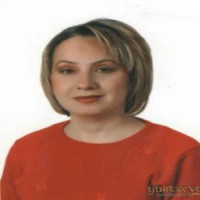
Grape Growing and Breeding

Born in 1965 in the Güneysu district of Rize province, Hüseyin ÇELİK graduated from the Department of Horticulture at the Faculty of Agriculture of Ondokuz Mayıs University with honors in 1988. He completed his master's degree in Viticultural Science in 1990. He became a Doctor of Science in the Department of Viticulture and Breeding in 1995, Assistant Professor in the same field in 1996, Associate Professor in 2003, and Professor in 2009.
In general, he studies grapevine propagation, hybridization, and selection breeding in developing new varieties, disease resistance, and quality and quantity of grapes. With his breeding studies on foxy grapes (Vitis labrusca L) specific to the Black Sea Region, he registered 5 foxy grape varieties ('Ulkemiz', 'Rizessi', Rizellim, 'Çeliksu' and 'Rizpem') for the first time in Turkiye and introduced them to the country's viticulture.
He is the namesake of the new berry fruits that are not cultivated in Turkiye, unknown or left in nature, such as Turkish new berry fruits named as Maviyemis, Turnayemisi, Kekreyemis, Guzyemisi, Çayuzumu and Çobanuzumu’s Fruit, and he is an academician who enabled the inclusion of these fruit species in Turkish agriculture. In addition to blueberry, cranberry, lingonberry, autumn olive berry, Caucasian whortleberry, and bilberry species, which are used as functional foods, he also studies aronia, golden berry (physalis, tomatillo), goji berry, honeyberry, currants, blackberry, raspberry and other unknown berry fruits. .
He introduced the maviyemis (named in Turkish) fruit, which had no plants and/or fruits in Turkiye until the 2000s and became famous in the world as BLUEBERRY, to Turkey for the first time, and he carried out studies on the adaptation, propagation, yield-quality, growth and development of blueberry varieties in many different regions of Turkiye. He started blueberry arboriculture in Turkey by registering the blueberry varieties breed in foreign countries, and he took part in the establishment of thousands of decares of blueberry gardens in soil or soilless culture and pots in almost every region of Turkiye or provided technical-academic support-consultancy to the establishment of hectares of blueberry gardens. It pioneered the processing of blueberry fruit in the jam, cake, fruit juice, ice cream and fruit cake industry, making it a sector in Turkiye.
He has 256 scientific publications, including 19 books on viticulture cultivation and breeding and popular berry fruits like blueberry, cranberry, lingonberry, goji berry, Aronia berry, autumn olive berry, wild Vacciniums etc..
He has carried out dozens of projects with the support of consultancy of TÜBİTAK, SPO, EU, Bilateral Cooperation, University Scientific Research (BAP), Social Risk Reduction (SRAP), University-Industry cooperation and R&D, Development Agencies, Non-Governmental Organizations (Foundations) and Chambers and Private Sector R&D projects or participated in these projects as a researcher on Viticulture and functional and new berry fruits,
He has provided and continues to provide technical, administrative, scientific and technological consultancy to more than 20 commercial companies on grape cultivation (viticulture) and Turkey's new grapefruits, including blueberry. He has taken part in many social responsibility projects such as "From Seed to Tree", "My Fruit - My Tree, My Garden", "My Most Beautiful Balcony", "Agriculture on the Balcony", "I'm Establishing My Hobby Garden"...
Deputy Dean, Deputy Director of the Institute of Science and Technology, Department Head, Deputy Head of the Department, Head of the Department of Horticulture, Head of the Department of Viticulture and Breeding, Vice President of the Samsun Rizeliler Aid and Solidarity Association and Member of the Founders' Board, Consultant of the Environment and Computer-Technology Club. , Student consultancy, Assistant Professor, Associate Professor and Professor Representatives, Faculty Board, Institute Board Membership, Quality Board Presidency, Scientific journal editor-in-chief and editorial board membership, Forestry and Environmental Regulation Board Membership and Scientific Projects Evaluation Commission (BAP) membership. and served as a non-academic member and jury member.
He has disseminated the information he produced to farmers all over Turkiye by participating in dozens of news, TV and Radio programs in many written, visual and audio media organs. He has prepared and distributed thousands of brochures, posters, CDs and videos on social media (https://www.youtube.com/@blueberryTR/videos) for the promotion of new fruit species, especially blueberry. He has carried out scientific and technical-technological innovation studies in short and/or medium-long periods in many foreign countries such as America, Germany, Netherlands, Poland, Azerbaijan, Bulgaria, Czech Republic, Republic of Bosnia and Herzegovina and Georgia, and has participated in many international symposiums and congresses. Hundreds of seminars, panels, symposiums, congresses, scientific project evaluations, appointments-academic promotions, etc. took part in injuries.
He has the Scientist award, publication incentive awards, and outstanding achievement awards from the Land and Air Force Commands during his reserve officer period.
Viticulture, Horticulture, Berry Fruits, Propagation, Cutivar testing, adaptation, Vitis labrusca, Cultivar development, Vitis vinifera, Blueberry, Cranberry, Autumn olive berry, Aronia, propagation,
USEFUL LINKS
https://www.youtube.com/@blueberryTR/videos
https://www.instagram.com/profhuseyincelik?igsh=NXczbjM3Y3VndjRr&utm_source=qr
https://www.facebook.com/profhuseyincelik?mibextid=PtKPJ9
https://www.researchgate.net/profile/Huseyin-Celik
https://personel.omu.edu.tr/tr/huscelik
https://akademik.yok.gov.tr/AkademikArama/view/viewAuthor.jsp
Plant Biochemistry and Plant Nanotechnology

Plant Breeding and Genetic
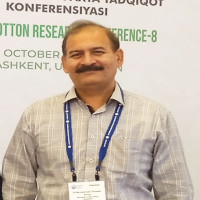
Dr Muhammad Tehseen Azhar is working as Associate Professor at the Department of Plant Breeding and Genetics, University of Agriculture Faisalabad (Pakistan), Besides, his focus is screening and development of segregating population resulting in the development of several bulks of cotton with more yield and fibre traits. Dr Azhar has specific interest in the development of cotton germplasm having tolerance to abiotic stresses, particularly for heat tolerance. Being a Borlaug Alumnus, he worked with various cotton geneticists namely, Dr Richard Percy, Dr Lori L. Hinze and Dr Jame Frelichowsk during a Norman E. Borlaug Fellowship at Texas A&M University and USDA-ARS, USA. Besides, Dr Azhar is Endeavour Alumnus and appointed as Adjunct Lecturer at the School of Plant Biology, UWA. Recently he is appointed as Adjunct Professor, School of Agriculture Sciences, Zhengzhou University, Zhengzhou, China. In addition, Dr Azhar is appointed as a Chair of Germplam and Genetic Stock in International Cotton Genome Initiative (ICGI). More recently, he has been awarded with Gold Medal as Young Cotton Breeder of the Asia by International Cotton Researchers Association (ICRA).
Plant Biotechnology







I am a Research Scientist-Plant Molecular Biology and a professor in the Department of Molecular Biology and Genetics, University of Erzurum Technical, Erzurum, Turkiye. I received MSc in Agriculture from the University of Ataturk, Erzurum, Turkiye. After completing PhD in Plant Molecular Biology at Hatay Mustafa Kemal University, Hatay, Turkiye. I am currently investigating the effects of biotic and abiotic stress on plant growth, development and crop yield. My research is mainly focused on understanding the mechanisms of plant stresses at the physiological, biochemical and molecular levels. Also, my expertise includes transcriptomics, qRT-PCR, genetic modified organisms, miRNA, molecular marker techniques, and plant breeding.
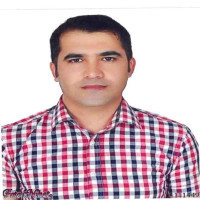
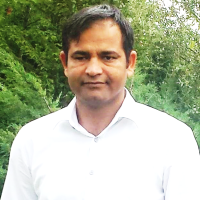
I am serving Centre of Excellence in Molecular Biology, University of the Punjab, Lahore, Pakistan as Associate Professor since 2021. I have served Department of Agricultural Genetic Engineering, Faculty of Agricultural Sciences and Technologies, Nigde Omer Halisdemir University, Turkey for seven years while has also completed postdoctoral fellows at University of Ankara, Turkey and University of Bologna, Italy. I primary focus on utilizing both conventional and non-conventional approaches to develop climate-resilient cotton varieties. My research interests span a wide spectrum, encompassing the breeding of climate-resilient cotton varieties, the engineering of biotic stress tolerance traits in economically significant crop plants, the development of dsRNA-based biopesticides for improved insect pest management, and the regulatory aspects of GM cotton. With over 120 peer-reviewed research articles published in international and national journals, I have also edited a book titled Potato Production Worldwide. Furthermore, I also serve as the editor of SCI-indexed journals such as PLOS ONE, Frontiers in Plant Sciences, Frontiers in Genetics, and the Journal of Cotton Research. I do acknowledges the significant impact of transgenic technology on agriculture and thus have also achieved notable success in this realm.
Biosystem Engineering
Pasture-Meadow Forage Plants
Industrial Crops
Entomology
Phytopathology

Animal Breeding and Improvement
AK

Fruit Growing and Breeding
 Web
Web
Vegetable Growing and Breeding
Sustainable Agriculture
Ankara University, Faculty of Agriculture, Ankara, Türkiye
Ornamental Plants Growing and Breeding
Cereals
Agricultural Economics
 Web
Web
Mehmet Aydoğan is an Associate Professor at the Department of Agricultural Economics, Faculty of Agriculture, Malatya Turgut Özal University. He is also the Research Coordinator, Scientific Publications Coordinator, Head of the Department of Agricultural Consultancy and Deputy Head of the Department of Agricultural Economics. He is working on Agricultural Extension, Rural Communication, Rural Sociology, Rural Development and Rural Social Networks.
Medicinal and Aromatic Plants
Soil Science and Plant Nutrition

Grain Legumes
Feeds and Animal Nutrition